


Description
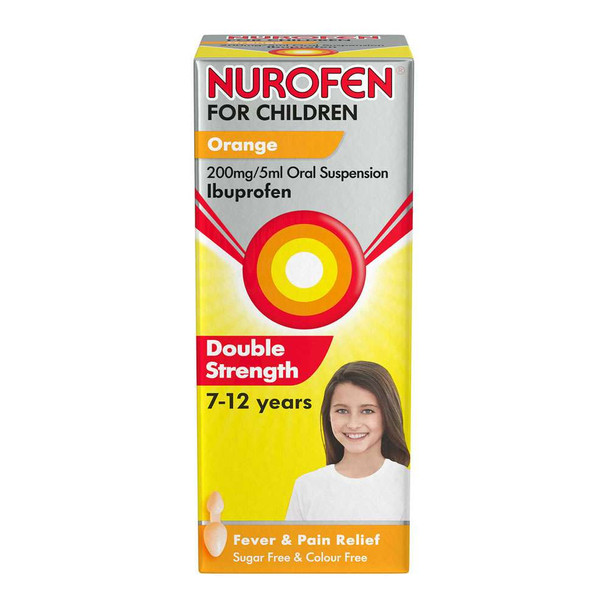
Nurofen Double Strength Children Orange 100ml is an ibuprofen oral suspension used to help relieve mild to moderate pain and reduce fever in babies and children. It contains a higher concentration of ibuprofen than standard children’s ibuprofen liquids, so a smaller volume may be needed to deliver the correct dose.
What is Nurofen Double Strength Children?
Nurofen Double Strength Children is a liquid medicine containing ibuprofen, a non-steroidal anti-inflammatory drug (NSAID). It is suitable for babies and children aged 3 months to 12 years who weigh more than 5kg. The orange-flavoured suspension is supplied with an oral syringe to help measure doses accurately.
How it works
Ibuprofen helps to reduce pain, inflammation and fever by lowering the body’s production of prostaglandins, which are substances involved in pain signalling and temperature regulation.
What it is used for
Nurofen Double Strength Children is used for the short-term treatment of pain and fever in children, including symptoms associated with common childhood illnesses. It may be used for:
- Fever (high temperature), including symptoms associated with colds and flu
- Post-immunisation fever
- Headache
- Toothache
- Sore throat
- Earache
- Muscular aches, sprains and strains
For related support and options, you can browse our Aches & Pains range, including headache relief and muscle and joint pain relief, or view our wider pain relief selection.
You may also wish to explore other products from the same brand on our Nurofen page.
Dosage & How to Take
Always read the product label and enclosed leaflet before use. Use the oral syringe provided and measure doses carefully. Shake the bottle well before each dose.
This product contains ibuprofen 200mg per 5ml.
Give by mouth. Leave at least 6–8 hours between doses. Do not give more than 3 doses in any 24-hour period.
- 3–6 months (over 5kg): 2.5ml up to 3 times in 24 hours
- 6–12 months: 2.5ml up to 3 times in 24 hours
- 1–3 years: 2.5ml up to 3 times in 24 hours
- 4–6 years: 5ml up to 3 times in 24 hours
- 7–9 years: 7.5ml up to 3 times in 24 hours
- 10–12 years: 10ml up to 3 times in 24 hours
For babies aged 3–6 months, seek medical advice if symptoms worsen or persist for more than 24 hours. For children over 6 months, seek medical advice if symptoms persist for more than 3 days or if you are concerned at any time.
Important Safety Information
Do not give this medicine if your child:
- Is allergic to ibuprofen or to any other NSAID (including aspirin)
- Has (or has had) a stomach ulcer, stomach bleeding, or perforation
- Has severe heart, kidney or liver problems
- Is severely dehydrated (for example, due to ongoing vomiting or diarrhoea)
Speak to a pharmacist or doctor before use if your child has asthma, kidney problems, a history of stomach problems, inflammatory bowel disease, heart conditions, or is taking other medicines (including blood thinners, steroid tablets, or other anti-inflammatory pain medicines).
Do not give with any other ibuprofen-containing product or other NSAIDs. If your child develops wheezing, difficulty breathing, swelling of the face/lips/throat, a severe rash, black stools, blood in vomit, or unusual bruising/bleeding, stop use and seek urgent medical advice.
If you would like more information about how WithAid supports safe use of medicines, see About Us or How to Shop.
Frequently Asked Questions
What does “double strength” mean?
“Double strength” refers to the concentration of ibuprofen in the liquid. This product contains 200mg per 5ml, which is higher than many standard children’s ibuprofen liquids (often 100mg per 5ml). A smaller volume may therefore be needed for the same ibuprofen dose.
What age is Nurofen Double Strength Children suitable for?
It is suitable for babies and children aged 3 months to 12 years who weigh more than 5kg. Always use the dosing instructions for your child’s age and follow the leaflet.
How quickly can I repeat a dose?
Leave at least 6–8 hours between doses. Do not give more than 3 doses in any 24-hour period unless advised by a healthcare professional.
Can I give this with paracetamol?
Paracetamol and ibuprofen can sometimes be used together for children, but it is important to follow dosing instructions for each medicine and avoid giving more than recommended. If you are unsure, ask a pharmacist for advice.
Can I use this for fever after vaccinations?
It may be used to reduce fever or discomfort following routine childhood immunisations, following the dosing guidance on the label and leaflet. Seek advice if your child remains unwell or you are concerned.
Is this suitable for teething pain?
It can be used for short-term pain relief such as discomfort associated with teething, provided your child meets the age and weight criteria and you follow the dosing instructions.
Should I give it with food?
Ibuprofen can sometimes cause stomach upset. If your child has a sensitive stomach, giving the dose with food or milk may help. If stomach symptoms occur or persist, stop use and seek advice.
Can my child take this if they have asthma?
Some people with asthma may be sensitive to NSAIDs. If your child has asthma (or has previously had wheezing after ibuprofen or aspirin), speak to a pharmacist or doctor before use.
Can I give this if my child is dehydrated from vomiting or diarrhoea?
Ibuprofen may increase the risk of kidney problems if a child is dehydrated. If your child has significant vomiting or diarrhoea, seek medical advice before giving ibuprofen.
What if my child is taking other medicines?
Check with a pharmacist or doctor before use if your child is taking other medicines, especially other painkillers or anti-inflammatory medicines (NSAIDs), blood thinners (anticoagulants), oral steroids, or some medicines for blood pressure or kidney conditions.
What should I do if I accidentally give too much?
Seek urgent medical advice if you think your child has taken more than the recommended dose, even if they seem well. Take the bottle or leaflet with you so healthcare professionals can see what was taken.
How long can I use this medicine for?
This medicine is for short-term use. For babies aged 3–6 months, seek medical advice if symptoms persist beyond 24 hours. For children over 6 months, seek medical advice if symptoms persist beyond 3 days or worsen.
Does it contain sugar or artificial colours?
Check the packaging and patient information leaflet for the most up-to-date ingredient information, especially if your child has allergies or intolerances.
Where can I see other Nurofen products?
You can view related items on our Nurofen brand page.
Details
Medicine Type: |
Pharmacy Only |